
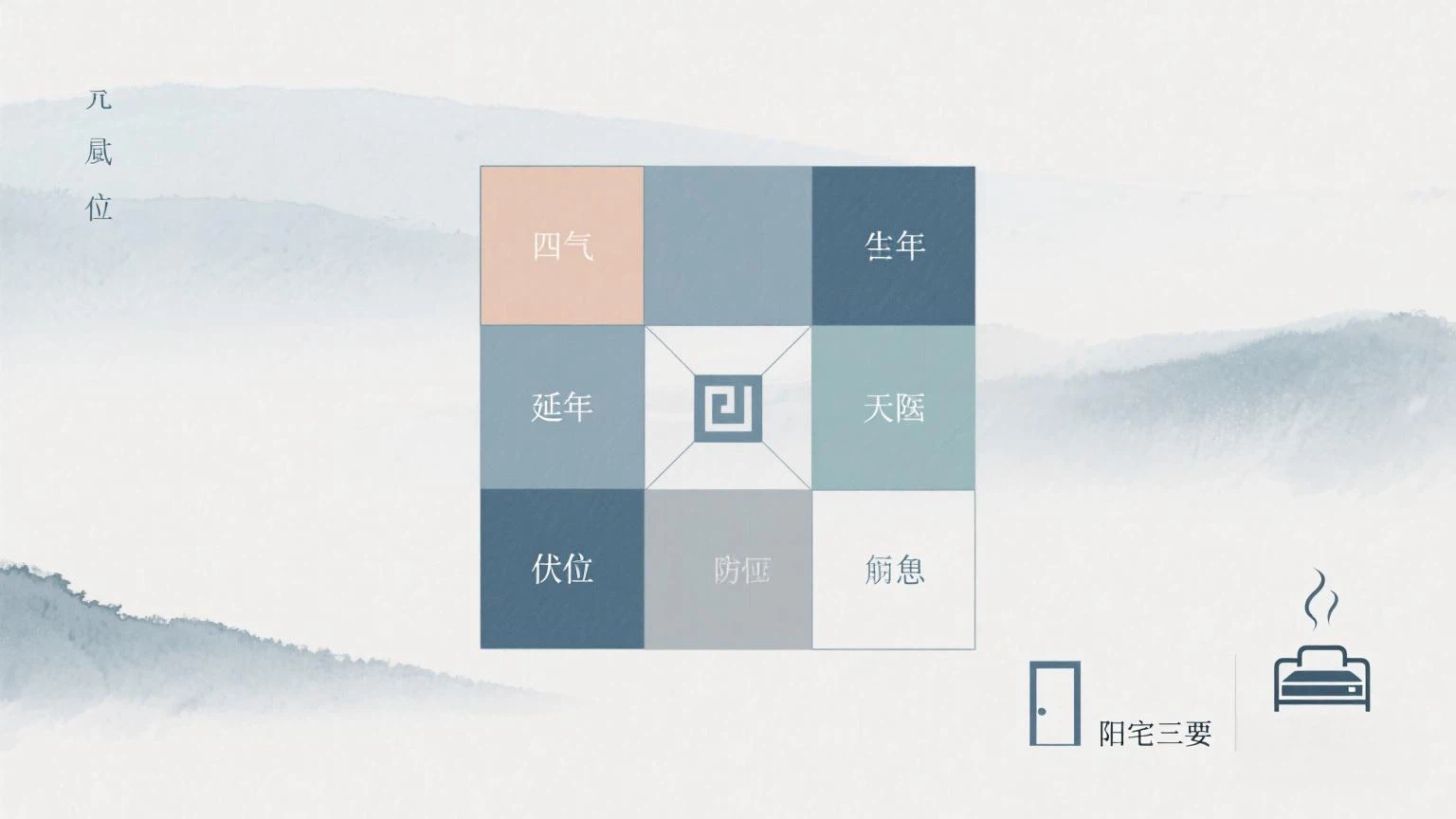
What exactly does the Eight Mansions talk about? In simple terms, it focuses on the matching of "house" and "person": which hexagram (house hexagram) the house belongs to, and which hexagram (life hexagram) the person belongs to. When placing a person in a house, try to ensure that daily activities fall in suitable positions and avoid unfavorable ones.
How is the life hexagram determined? Don't be intimidated by the formulas; the main idea is to categorize a person into one of the eight hexagrams based on their birth year, dividing them into the East Four Life and West Four Life camps. You can first check the attached table and then verify the logic: just remember that East Four Life is more suitable for East Four Houses, and West Four Life is more suitable for West Four Houses.
How to determine the house hexagram? It is usually based on the direction of the "door" (also known as the door hexagram): look at the direction of the main entrance door to determine which hexagram the house belongs to, thus obtaining the distribution of auspicious and inauspicious positions in the nine-grid layout. Different house hexagrams will change the positions of the four auspicious and four inauspicious points, so do not rigidly memorize a fixed diagram.
How to implement the three essentials? The door, master bedroom, and kitchen are the three places where daily energy enters and stays the most. Focus on placing them in auspicious or favorable positions as much as possible; if you encounter mismatches or conflicts, consider alternative solutions or slight adjustments to the flow, rather than making drastic changes right away.
What to do if there is a mismatch? Don't panic; the Eight Mansions has a "adjustment" approach: modify frequently used positions (such as the bedroom bed position or kitchen stove position), or adjust the flow of entry and exit, allowing people to walk more in relatively auspicious positions. Achieving "seeking auspiciousness and avoiding inauspiciousness" is already a very practical improvement.
What are the common pitfalls? The biggest pitfall is "applying a fixed nine-grid auspicious and inauspicious diagram to all houses", ignoring the differences in house hexagrams; secondly, only looking at the floor plan without considering the actual site; and thirdly, "only looking at the life hexagram without considering the house hexagram", which leads to deviation. In the introductory stage, first ensure that the main line of "house hexagram - auspicious and inauspicious distribution - placement of the three essentials" is followed smoothly, and the effects will emerge.
Core Concept Simplified
- Life Hexagram: Calculate a person's "life hexagram" (such as Kan, Zhen, Xun, Li, Qian, Dui, Gen, Kun) based on their birth year, divided into East Four Life and West Four Life.
- House Hexagram: Determine the house's "house hexagram" based on the "main door's direction" or "door hexagram", dividing into East Four Houses and West Four Houses.
- Matching of House and Life: In principle, East Four Life should reside in East Four Houses, and West Four Life should reside in West Four Houses. If they do not match, internal layout and daily flow should be adjusted to resolve the issue.
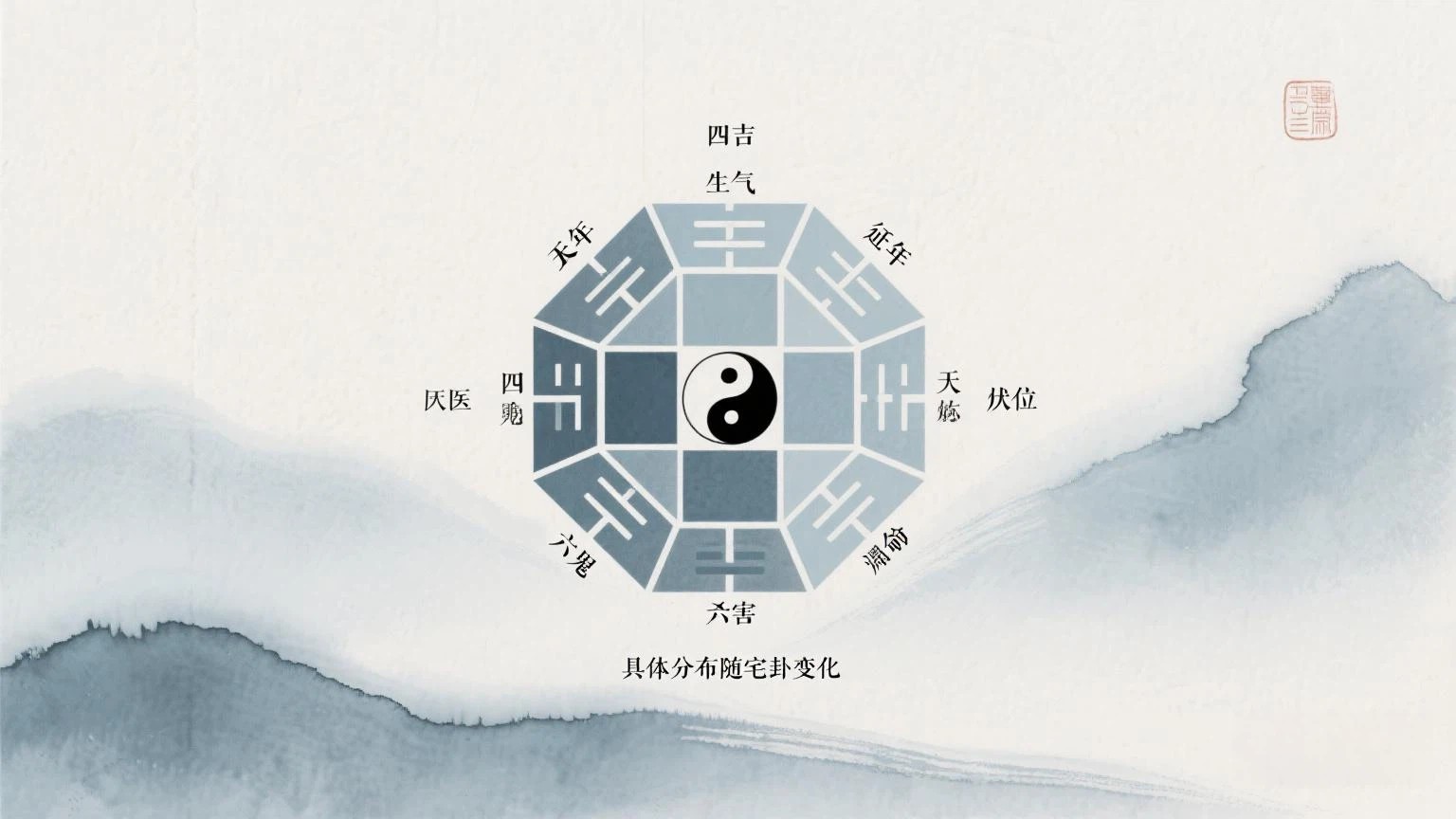
- Nine Stars and Four Auspicious and Inauspicious: Sheng Qi, Yan Nian, Tian Yi, and Fu Wei are the four auspicious; Wu Gui, Liu Sha, Jue Ming, and Huo Hai are the four inauspicious, distributed within the nine-grid layout.
- Three Essentials of Yang House: Door, master bedroom, and kitchen (stove). Use the door hexagram to determine the house, then ensure the "three essentials" occupy auspicious positions or face auspicious directions as much as possible.
Practical Path for Beginners
1) Determine "person": Check the life hexagram to categorize as East Four Life or West Four Life, recording the main residents while considering family members.
2) Determine "house": Measure the door direction to establish the house hexagram, draw the nine-grid layout, and clarify the distribution of four auspicious and four inauspicious positions.
3) Place the "three essentials": Door should align with Sheng Qi/Yan Nian; master bedroom should align with Tian Yi/Yan Nian; stove position should face auspicious or align with Fu Wei; other spaces should aim for "moving in auspiciousness, staying away from inauspiciousness".
4) In case of mismatch: Consider adjusting the bed direction, stove position, and entry/exit flow; if necessary, use screens or cabinets to guide the flow.
Introductory Case Study (Teaching Example)
- Situation: A reader's life hexagram is "Li" (belonging to East Four Life), planning to move into a "Zhen House" (belonging to East Four House).
- Steps:
1) Determine life hexagram: Li life, East Four Life;
2) Determine house hexagram: Main door measured as "Zhen Door", belonging to East Four House;
3) Layout points: Prioritize placing the entrance door or main flow in Sheng Qi/Yan Nian position; choose master bedroom near Tian Yi or Yan Nian; stove position should be as close to Fu Wei or face auspicious.
- Note: The specific distribution of auspicious and inauspicious stars in the nine-grid varies due to different "house hexagrams". This case is an introductory demonstration and should be combined with the actual floor plan and house hexagram distribution.
Common Questions
- How to calculate the life hexagram? You can use the birth year reference or a simplified formula, noting the differences in algorithms for Gregorian/Lunar calendars and gender.
- Which is prioritized, door hexagram or house hexagram? This article takes the perspective of "three essentials of Yang House", determining the house hexagram based on the main door's direction, then combining it with the life hexagram for matching and resolution.
- Is the resolution a one-time fix? Resolution is a balancing method and should be combined with modern living standards such as lifestyle habits and ventilation lighting.
References
- "Mirror of Eight Mansions" Anonymous (Qing Dynasty, Late Qing Period, circa 1860–1900) - Basic principles and applications of life hexagram, house hexagram, four auspicious and four inauspicious, and matching of house and life.
- "Three Essentials of Yang House" Zhao Jiufeng (Qing Dynasty, Qianlong Period, circa 1740) - Key points of layout for door, master bedroom, and stove, and application of door hexagram.
- "Five Secrets of Geography" Zhao Jiufeng (Qing Dynasty, Qianlong Period, circa 1740) - Use of Luo Pan and key points of Yang House practice (supplementary reference).