
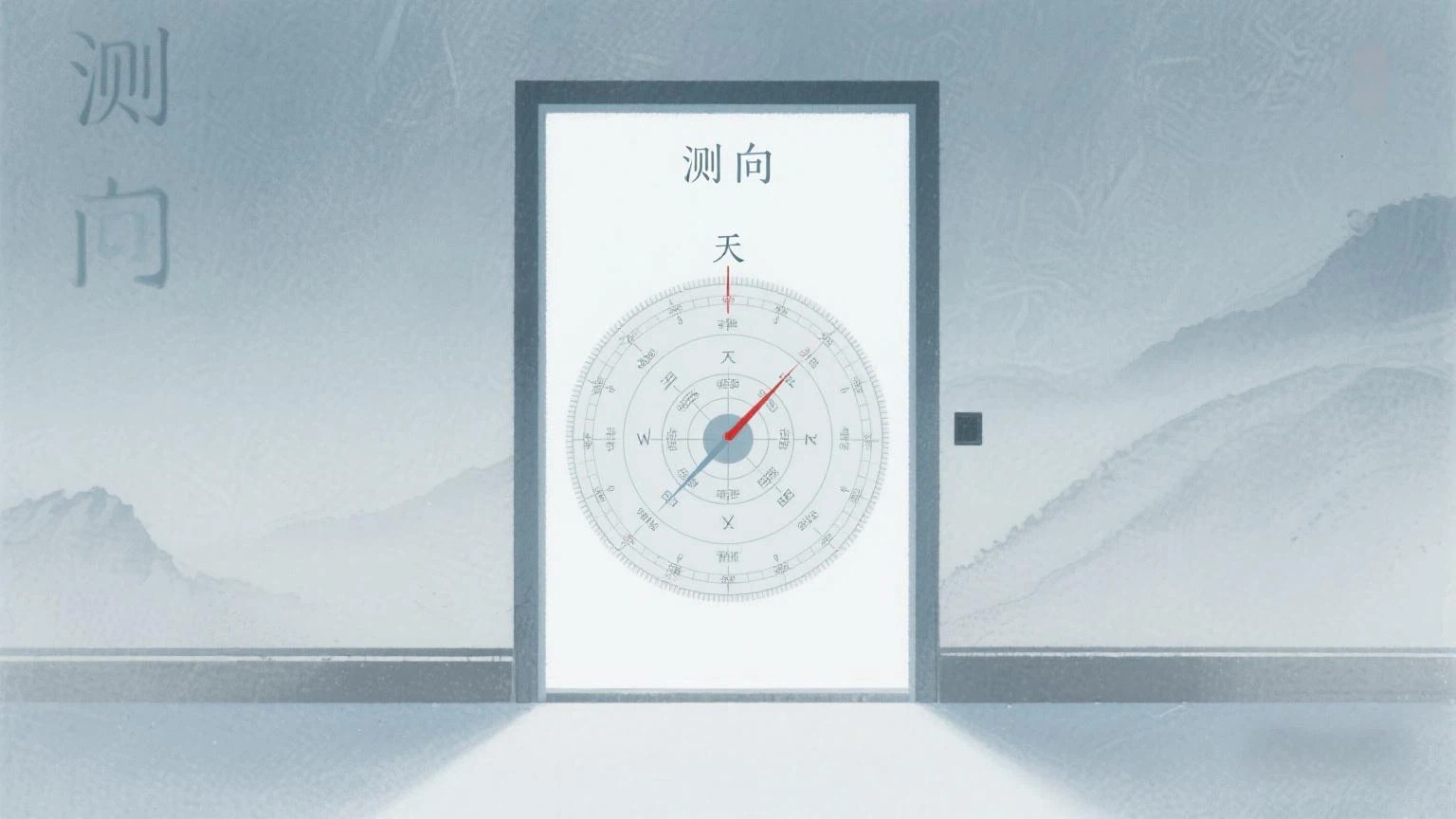
Why learn direction measurement? Simply put, a compass is a graduated compass used to determine the "sitting" and "facing" of a house. The direction the door faces is the "facing"; the opposite side is the "sitting". First, measure the direction accurately, and the subsequent eight houses and flying stars will have a reference point.
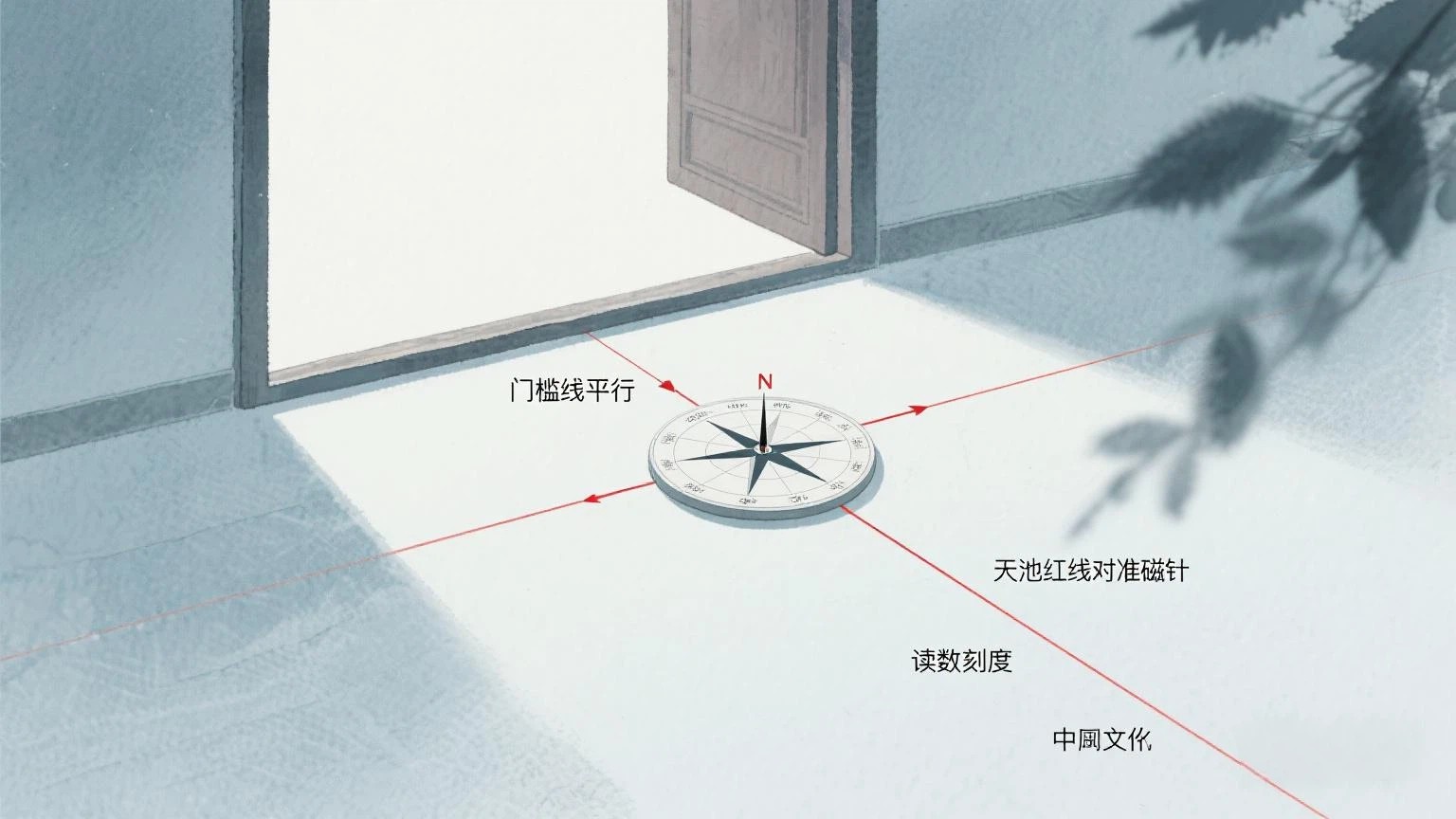
How to hold the compass steady? Don’t treat it as a "magical tool"; keep your hand steady, the compass level, and parallel to the threshold line. The magnetic needle and the red line in the center must completely overlap before reading the measurement. Wind, electrical appliances, and metal on-site can deflect the needle, so try to clear the area before measuring.
The "Twenty-Four Mountains" sounds mysterious, but it actually divides 360° into 24 parts, each 15°, paired with the names of heavenly stems, earthly branches, and trigrams for easy reference. For example, measuring the Xun direction is roughly the range of southeast by east. In the beginner stage, don’t get hung up on decimal points; first, learn to stabilize and repeat—measure multiple times at the same location and take the median.
How to use sitting and facing at home? In most cases, we take the direction of the main entrance as the "facing"; the main axis of the layout can also serve as a reference. Record the readings and time carefully, as they will be used later for drawing the nine palaces and judging the house hexagrams. If you encounter irregular doors or strong interference, switch to measuring outside the door or along the main axis of the building's outer wall; don’t get stuck on one point.
Core Terms and Components
- Tianchi and Red Line: The "Tianchi" at the center of the compass has a red center line used for aligning with the magnetic needle for calibration.
- Magnetic Needle and "T-shaped Tail": The end of the magnetic needle often has a "T-shape" for reading and calibration; when reading, ensure the needle completely overlaps with the red line.
- Cross Fishing Line (or Cross Line): Used to keep parallel with the threshold line or the main axis of the building, ensuring the compass is parallel to the object being measured.
- Twenty-Four Mountains: The compass divides 360° into 24 directions, each mountain 15°, marked with "heavenly stems, earthly branches, and trigrams" (e.g., Jia, Mao, Xun, etc.).
Preparation Before Operation
- Remove metal and strong magnetic items, mobile phones, etc., keep the compass level at chest/abdomen height, and avoid wind and vibration interference.
- Choose the door or the main axis of the building as the object, determine the "facing" (direction) to be measured, and record environmental interference if necessary.
Basic Direction Measurement Steps
1. Stand in the middle outside the door or inside facing outward, ensuring the compass cross line is parallel to the threshold line/main axis.
2. Slowly rotate the inner compass plate until the magnetic needle completely overlaps with the red line in the Tianchi, waiting for the needle to stabilize.
3. Read the scale and mountain position indicated by the compass for the "facing" (e.g., Xun direction, 157.5°±) and record it.
4. If "sitting" is needed, record the "sitting" direction opposite to the "facing" (for example, sitting Qian facing Xun), and note the reading time and whether there was interference.
Beginner Case Study (Teaching Example)
- Scenario: Building A in a certain community, measuring the direction of the main entrance.
- Steps:
1) Clear the area and hold the compass: Remove metal items, keep the compass level and parallel to the threshold line;
2) Calibration: Rotate the inner plate until the magnetic needle overlaps with the red line, waiting for stabilization;
3) Reading: Record the "facing" as Xun direction (example), and note the degree (approximately 157.5°);
4) Remarks: Mark the wind strength and surrounding interference sources for the day; if "sitting" is needed, record it as "sitting Qian facing Xun".
- Note: This case is for operational demonstration; actual readings should be based on the site; different buildings or door types may affect readings.
Common Questions
- Does wearing gold and silver have a big impact? Wearing metal may affect the magnetic needle; it is recommended to remove or stay away from them during measurement.
- What to do if the door shape is irregular? Use the straightest section of the building's main axis or threshold line as the reference; if necessary, take multiple samples.
- Do indoor furniture affect direction measurement? Metal furniture or electrical appliances may cause interference; try to avoid them or measure outside the door.
References
- "Five Secrets of Geography: Discussion on the Compass" by Zhao Jiufeng (Qing Dynasty, Qianlong period, around 1740) — Compass structure, Tianchi red line, calibration methods
- "Five Secrets of Geography" by Zhao Jiufeng (Qing Dynasty, Qianlong period, around 1740) — Division of degrees for the Twenty-Four Mountains, key points for holding the compass and measuring direction
- "Three Essentials of Yang House" by Zhao Jiufeng (Qing Dynasty, Qianlong period, around 1740) — Basic explanation of sitting, facing, and door hexagrams