
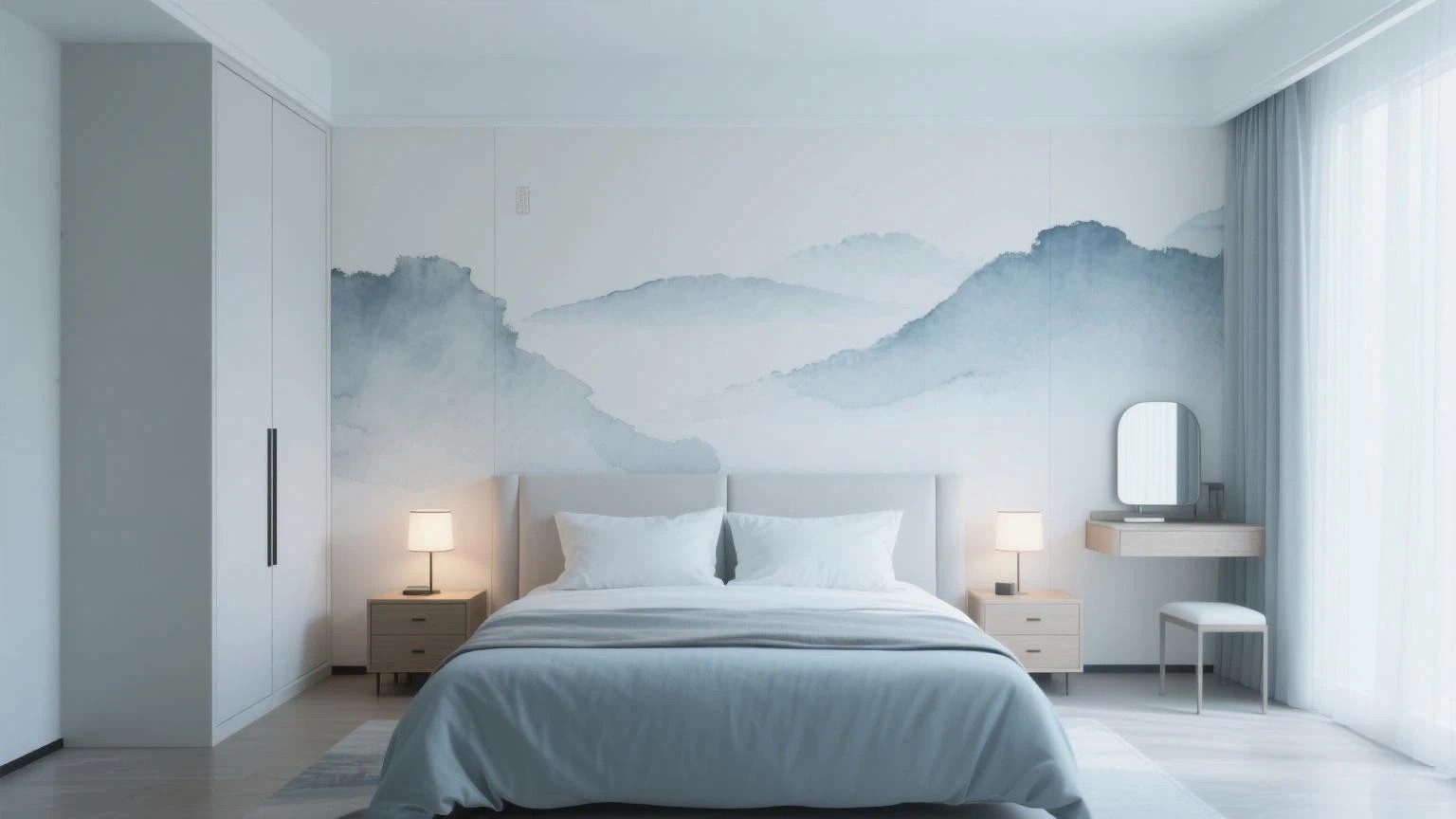
Furniture determines the order and flow of the bedroom. Proper arrangement can stabilize the "energy core," making sleep restoration the primary function of the space. This article focuses on the best layouts and taboos for wardrobes, dressing tables, and nightstands, and provides size and flow suggestions.
1. General Layout Principles
- Centered around the bed: The control position of the bed and the sense of support are prioritized, with other furniture surrounding rather than interfering.
- Flow does not cross the foot of the bed: Ensure the flow from the entrance to the wardrobe to the bathroom or dressing table avoids crossing the resting area at the foot of the bed.
- Privacy and concealment: Mirrors should not directly face the bed, and sharp corners should not point towards the bed.
- Concealed storage: Reduce open displays and visual load to stabilize emotions and rhythms.
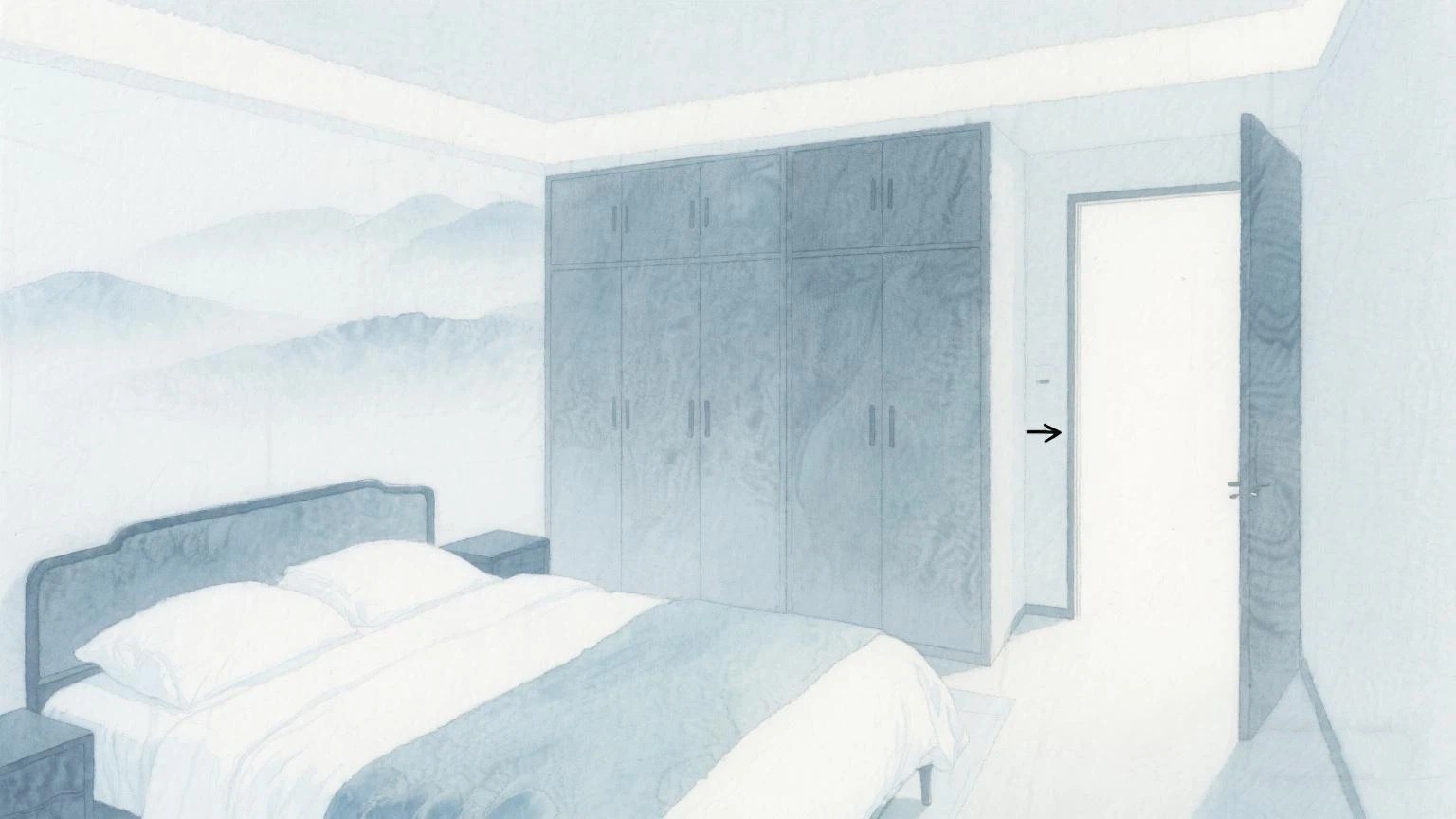
2. Wardrobe: Position and Door Relationship
- Best: Place against the wall, away from the bed side opening, to avoid the door directly facing the bed.
- Mirror strategy: Use built-in mirrors or change to side wall mirrors; avoid mirror doors facing the bed directly.
- Internal partitioning: Upper layer for bedding, middle layer for hanging clothes, lower layer for drawers; frequently used areas close to the flow.
- Size reference: Wardrobe depth 55–60cm, passage width ≥60cm (for small units ≥45cm).
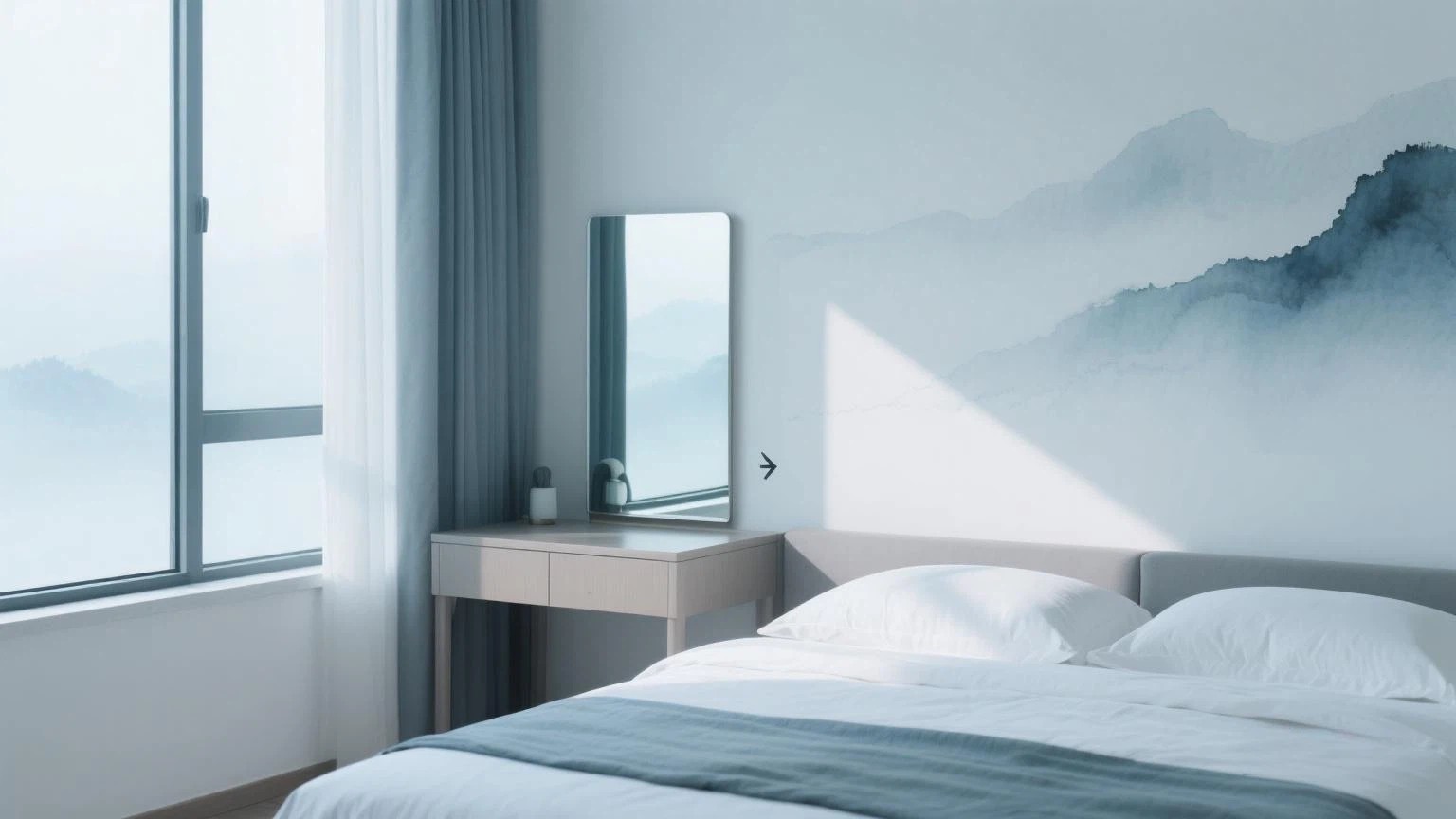
3. Dressing Table and Desk: Light and Line of Sight Management
- Light: Near the window but not against it; avoid backlight or strong reflections.
- Line of sight: Maintain a side or diagonal relationship with the bed, not facing it directly; use a screen for partial concealment if necessary.
- Merging functions: In small units, combine the dressing table and desk to reduce the number of furniture pieces.
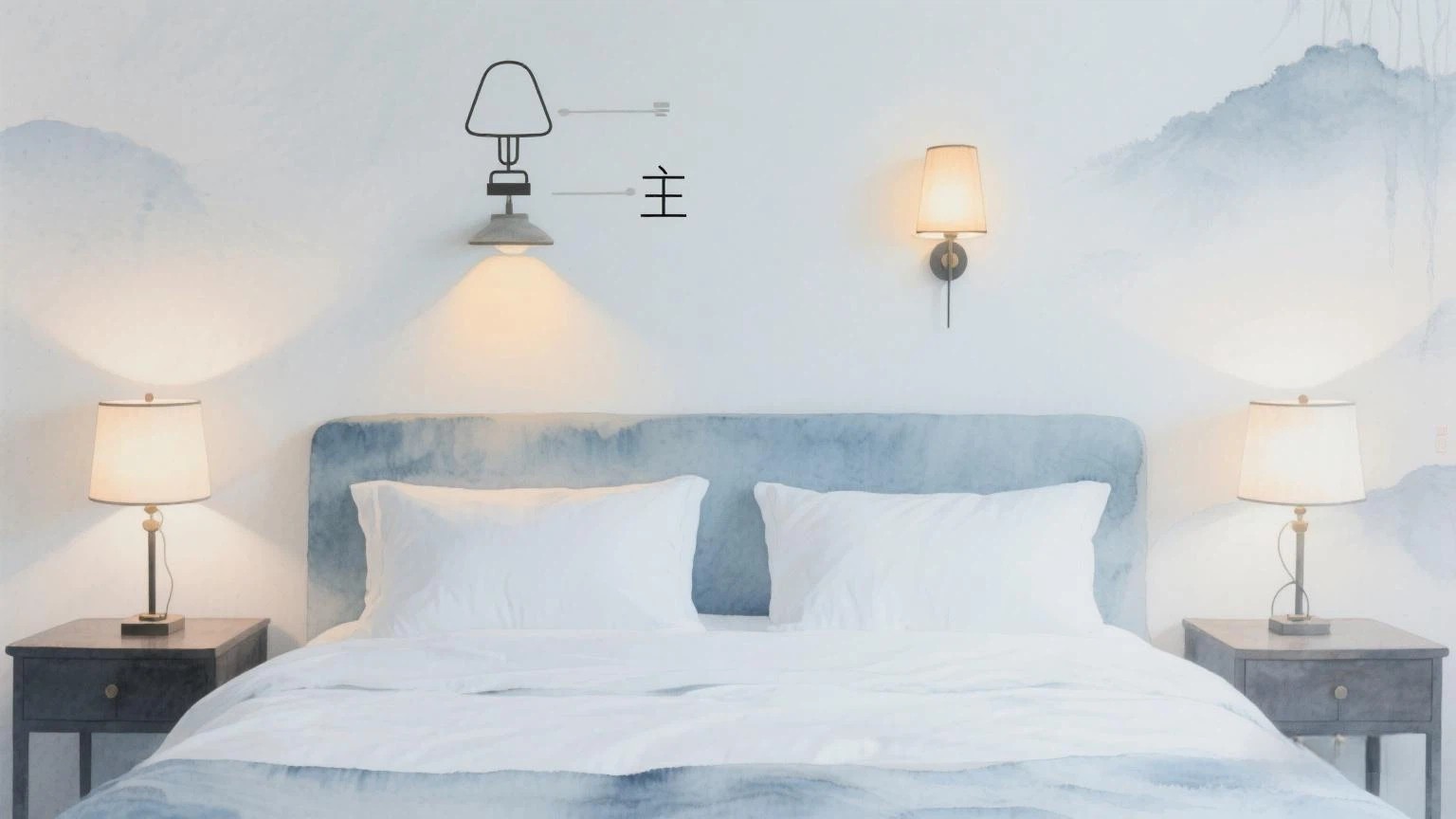
4. Nightstand and Lighting: Safety and Comfort
- Size and rounded corners: Height slightly lower than the mattress surface, prioritize rounded corners, avoid sharp corners pointing towards the bed.
- Lighting: Use adjustable bedside lamps and low-intensity ambient light, avoiding direct eye contact.
- Power sources and wiring: Conceal wiring storage to reduce visual and psychological interference.
5. Flow Design: Avoid Conflict and Layering
- Entrance buffer: Set a low cabinet or shoe-changing area inside the door to create a buffer zone.
- Cold and hot zones: Separate the wardrobe (cold zone) from the bed (hot zone) to reduce interference in living.
- Passage path: Walk around the bed, do not cross the foot of the bed; have guiding lights for nighttime paths.
6. Common Pitfalls and Corrections
- Mirror facing the bed: Move or cover; side wall mirrors are better than direct mirrors.
- Sharp corners and lines: Replace with fabric or rounded corners to reduce the "pointing feeling."
- Large furniture oppression: Use light colors and matte materials to weaken presence, leaving enough passage space.
7. Self-Assessment and Checklist (10 items)
1. The flow from the entrance to the wardrobe does not cross the resting area at the foot of the bed.
2. Wardrobe doors do not directly face the bed; mirrors do not directly reflect the bed.
3. The dressing table has soft lighting, not backlit or strongly reflective.
4. In small units, merge functions as much as possible to reduce the number of furniture pieces.
5. The nightstand has appropriate rounded corners and height, and the lighting is adjustable.
6. Power cords are concealed, and the surface is not cluttered with items.
7. Passage width ≥60cm (for small units ≥45cm), with no risk of squeezing or bumping.
8. Nighttime paths have guiding lights, and the floor is free of obstacles.
9. Large furniture uses light colors and matte materials to weaken visual impact.
10. If there is an ensuite, the relationship between the wardrobe and door position has been assessed to avoid doors directly facing the bed.
References and Source Notes
- "The Ten Books of Yangzhai": Emphasizes the stability of the main position (bed/bedroom as the main living position) and the principle of not disturbing the main position in furniture layout.
- "Qing Nang Jing" and various annotations: The four-symbol pattern is used to explain the distribution of furniture with "support behind, open in front, and division on the sides," avoiding sharp corners and strong reflections that disrupt the situation.
- "The Book of Burial" (Guo Pu): Uses "Qi rides the wind to scatter, boundaries stop the water" as the general principle of form and mountain; indoor flow and buffer zone settings take the meaning of "boundary stop" to stabilize the energy field.
- "The Yellow Emperor's Housing Classic": Emphasizes the harmony of yin and yang in housing and comfortable living; the article's "light and line of sight management" and "concealed storage" are based on this principle.
- "The Eight Houses Mirror," "Shen's Xuan Kong Studies," "Xuan Kong Feng Shui Studies": The arrangement of furniture and mirrors still needs to consider the factors of time and space (life hexagram/flying stars/lucky chart); this article focuses on form and mountain, with related principles explained in another article.
- "The Five Secrets of Geography," "The Hanlong Classic," "The Yilong Classic": The five essentials of form and the principles of seeking dragon orientation derive the principles of "sitting solidly and facing empty" and "avoiding direct shots" for indoor furniture.