

The bed placement is the "first variable" in bedroom feng shui. As long as the bed is positioned correctly, most problems can be easily resolved. This article focuses on the principles of bed placement, directional influences, and common conflicts, providing practical solutions when space is limited through eight strategies.
1. Four Major Principles of Bed Placement
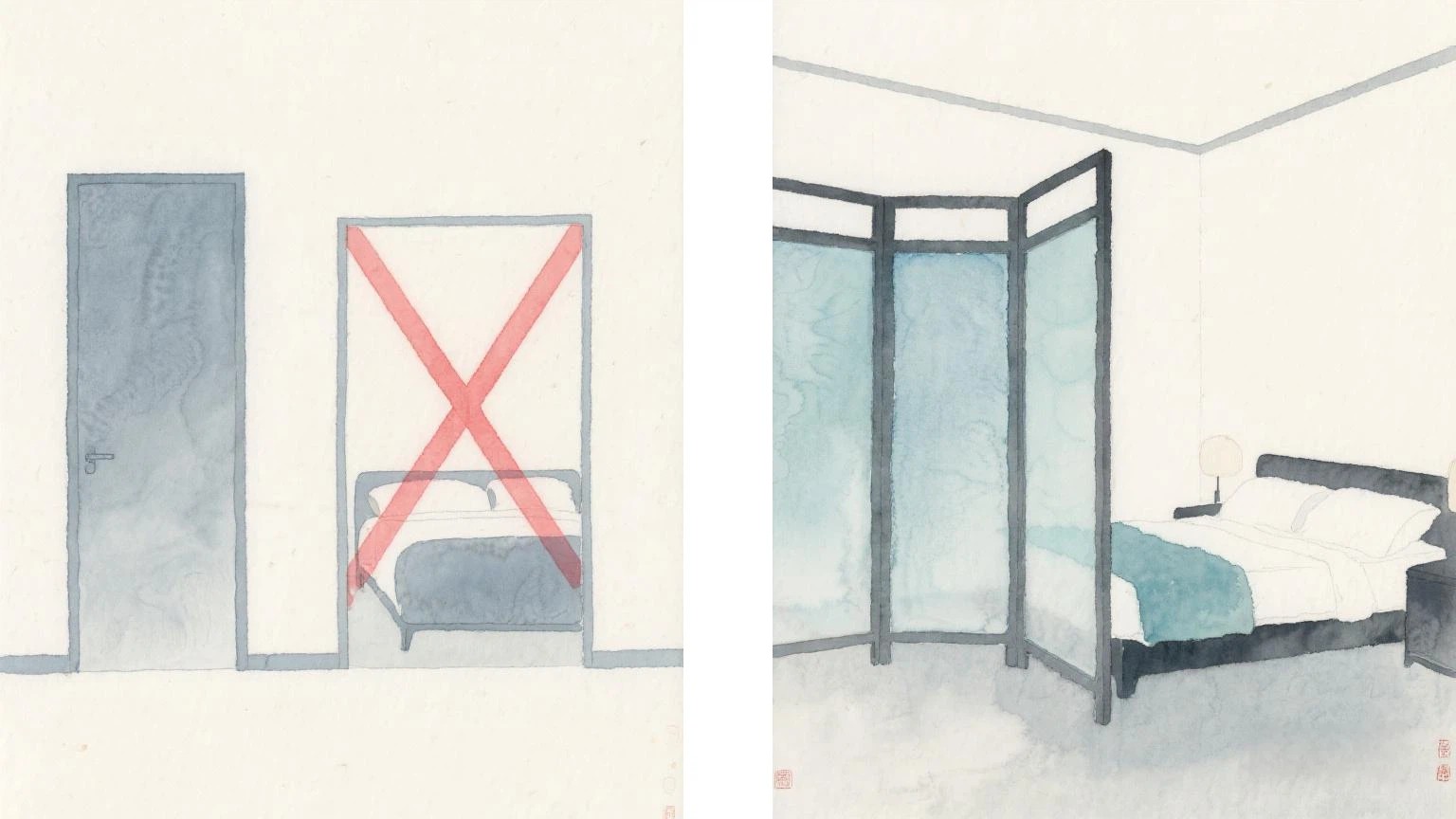
- Control Position: The bed should be positioned so that one can see the door from the bed, but not in a direct line with the door.
- Support from Behind: The head of the bed must have solid support (a solid wall or headboard), and should not be placed against a window or be suspended.
- Avoid High Pressure: The head should avoid overhead beams, ceiling fans, heavy light fixtures, or air conditioning units directly above.
- Low Stimulation: Stay away from strong reflections and noise sources, and ensure controllable and dim lighting at night.
2. Direction and Environmental Influence (Comfort First)
- East/Southeast: More morning light, suitable for early risers; needs light-blocking optimization.
- South: Good ventilation and strong light; needs temperature control and light-blocking to avoid excessive brightness.
- West/Northwest: Strong afternoon and evening light; it is recommended to enhance light-blocking and temperature control.
- North: Softer light and relatively stable temperature; needs warmth and moisture protection in winter.
Conclusion: Follow comfort and sleep measurements as the final basis, without making absolute judgments based on direction.
3. Common Conflicts and Their Effects
- Door Facing Bed: Privacy and security feel compromised, sleep is disturbed.
- Mirror Facing Bed: Reflection and psychological disturbances are significant, easy to wake up at night.
- Beam Pressing Bed: Creates a sense of oppression and unease, it is recommended to adjust the lighting or ceiling.
- Bed Against Window: Affected by noise and light leakage, large temperature variations in winter and summer.
4. Eight Practical Resolving Strategies (in Order of Priority)
1. Offset Bed Placement: Position the bed in an offset relationship to the door, slightly rotating or shifting it.
2. Screen/Low Cabinet Buffer: Set up a "flexible buffer zone" between the door and bed to weaken direct line of sight.
3. Mirror Relocation or Built-in: Move mirrors to side walls or inside wardrobe doors to avoid direct reflection onto the bed.
4. Nighttime Magnetic Cover: Prepare a removable cover for floor mirrors/dressing mirrors, and conduct a two-night cover test.
5. Adjust Door Leaf and Curtain: Change the direction of the door or add curtains to reduce the feeling of direct sight.
6. Raise Headboard + Wall Support: Enhance the "support from behind" feeling, effective only when there is a solid wall behind the head; if there is a window or hollow structure behind, this method cannot replace solid wall support.
7. Light Modification on Ceiling: Move the chandelier or fan position to weaken the visual oppression of overhead beams.
8. Small Apartment Combination: Merge functions (dressing table doubles as a desk), reduce bed size, and optimize movement lines to avoid conflicts.
【Illustration Position|Figure 4: See prompts_02-Bedroom Feng Shui Bed Placement Detailed Explanation-Text.md】
5. Special Apartment Types and Compatible Solutions
- Long Bedroom: Place the bed along the long side, with movement lines close to the wall side, and insert a buffer zone at the entrance.
- Sloped Ceiling/Loft: Avoid placing the bed at the lowest point and near beams, use light colors and linear lights on the ceiling to weaken oppression.
- Bay Window/Under Heating: Keep distance between the bed and window, add double-layer curtains and insulation materials.
6. Two-Night Testing Method (Decide Whether to Implement Changes)
- Night 1: Ensure light-blocking and mirror covering, record time taken to fall asleep and number of awakenings during the night.
- Night 2: Add screen/low cabinet buffer or try offset bed placement, record emotions and sleep quality.
- If it involves energy adjustments (life trigrams/ Xuan Kong flying stars/运盘), further evaluation of orientation and time盘 is needed; this test serves only as a reference for comfort and shape effects.
- If improvements are significant, proceed with minor adjustments to furniture and ceiling; if no significant changes, maintain a simplified plan.
7. Self-Assessment and Checklist (10 Items)
1. Can see the door from the bed but not directly facing it.
2. The head of the bed is stable, with a headboard or solid wall.
3. No overhead beams or heavy fixtures directly above the head.
4. Mirrors do not directly reflect the bed, or can be easily covered.
5. Maintain a reasonable distance from the window, with double-layer curtains for light control.
6. Movement lines do not cross the resting area at the foot of the bed.
7. Noise sources (windows/doors) and light leakage have been addressed.
8. Bedside lamp is dimmable, with soft lighting at night.
9. Dimensions and proportions are appropriate, with at least 45–60cm of passage space beside the bed.
10. If there is an attached bathroom, door position is offset, wet and dry areas are separated, and ventilation has been evaluated.
References and Source Explanations
- "Ten Books on Yang House": The three essentials of Yang House (door, main, stove) serve as the basis for the bed as the main position in the bedroom; the main position should have support, avoid direct conflicts, and the control position principle is derived from this.
- "Qing Nang Jing" and various annotations: The general principle of shape and form "sit solidly and face emptiness", the four symbol patterns (front Zhuque, back Xuanwu, left Qinglong, right Baihu) are used to deduce the requirement of "having support behind and openness in front" for bed placement.
- "Book of Burial" (Guo Pu): The principle of "qi rides the wind and disperses, boundary water stops" is transformed into the Yang House's "avoid direct conflicts, seek gentle transitions", corresponding to the shape and form resolution of door and mirror conflicts.
- "Huangdi's House Classic": Emphasizes the importance of yin and yang in residences and suitable lighting and ventilation, stressing harmonious living and mental well-being; the suggestions in this article regarding the "two-night testing method" and "light and light-blocking" are thus generalized for modern application.
- "Eight Houses Mirror", "Shen's Xuan Kong Studies", "Xuan Kong Feng Shui Studies": The energy system needs to combine life trigrams, orientation, and运盘 (time dimension) to judge auspiciousness; this article belongs to the principles of shape and form and comfort, while directional and time盘 judgments are discussed in another article.
- "Five Secrets of Geography", "Han Long Classic", "Yi Long Classic": The five essentials of shape law "dragon, cave, sand, water, direction" and the principles of seeking dragons and sitting solidly while facing emptiness; the avoidance of direct reflection of mirrors indoors belongs to modern shape and form experience, with few direct texts in ancient books, hence explained through the general principles of shape law.